Using Tissue Paper Texture with Acrylic
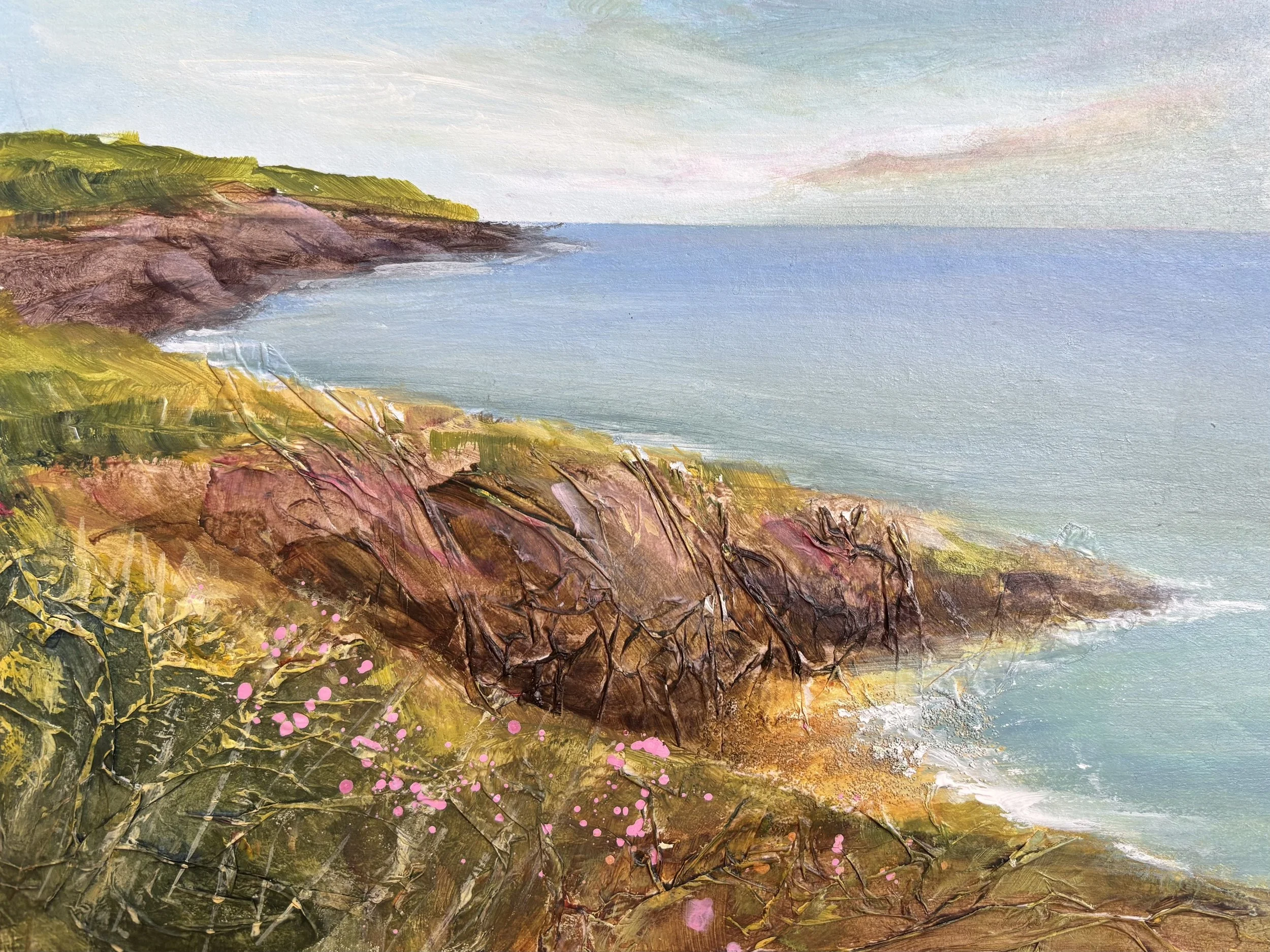
Painting by Cathryn Jeff
How can texture enhance a painting?
Texture transforms a flat painting by adding depth, interest and invites the viewer to look closer and engage with the work.
As a landscape artist, I work with many textures—plaster, papers, netting, mesh, leaves, and sand—but my favourite is tissue paper. It’s incredibly versatile, from simplified low subtle texture, to raised, sculpted forms that suggest grasses, rocks, foliage, and waves through directional creases and shaped contours.
Where to use tissue paper texture
Seascape rocks are my favourite subject for using tissue paper because the rough texture and cragginess of the rocks can be represented effectively by the folded creases in the tissue. This can greatly aid the painting process, as much of the intricate texture is created for you. As a result, there is less need to paint every small detail, since the tissue paper itself provides much of the natural texture and visual interest.
Foreground foliage and grasses are also excellent subjects for using tissue paper texture, as it can suggest long stems and intricate, busy patterns with minimal painted detail.
Where I wouldn’t use texture
Any areas where you would like to paint intricate details, such as flowers like daisies, should be considered carefully, as the texture of the surface can interfere with fine brushwork. I keep my painted textured foregrounds simple by using splattering techniques and the occasional grass line, which helps avoid overcomplicating the surface.
I also recommend using less texture in the sky and background. In reality, details diminish with distance due to perspective, so you naturally see less texture and definition in objects that are farther away. Keeping the background softer and less detailed helps create a greater sense of depth within the painting.
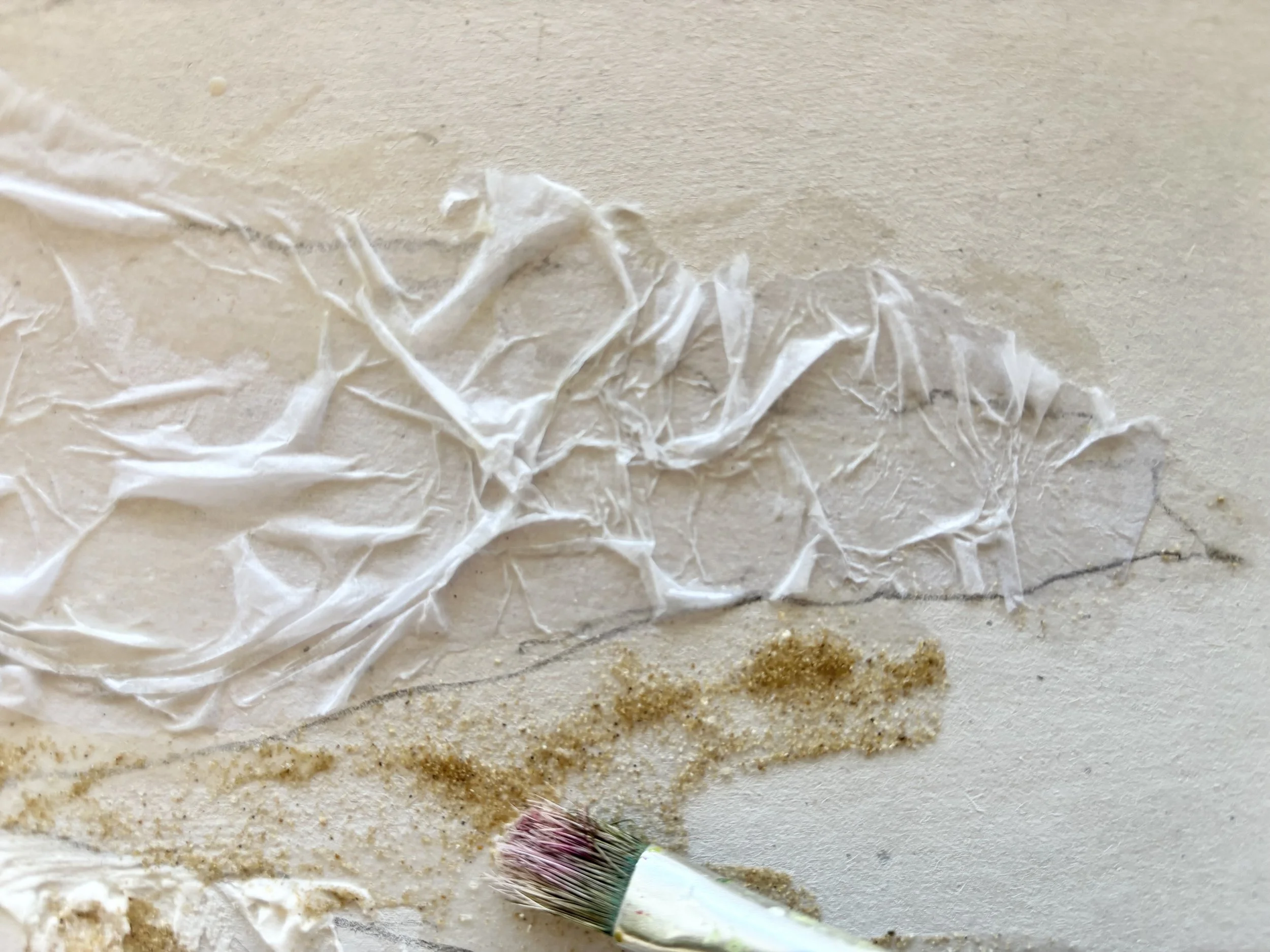
How I apply the tissue paper texture
After sketching out the elements of the scene, I tear sections of tissue paper and apply a layer of PVA glue to the areas where I want to create texture. I stick down one side of the tissue first, then gather it into creases to form the desired ridges and directional lines, pressing the paper onto the glued surface as I work across the section.
Because the tissue is so thin, I often layer it to cover all the area. Pre-creasing and scrunching the tissue before applying it to the glue can create higher ridges and more defined shapes. I manipulate the tissue using my fingers or the glue brush until I am happy with the effect. This process can get quite messy and sticky!
I do not overthink this stage, as much of the image can be developed later with paint. Therefore, if some of the texture extends slightly beyond the intended area, I am not too concerned.
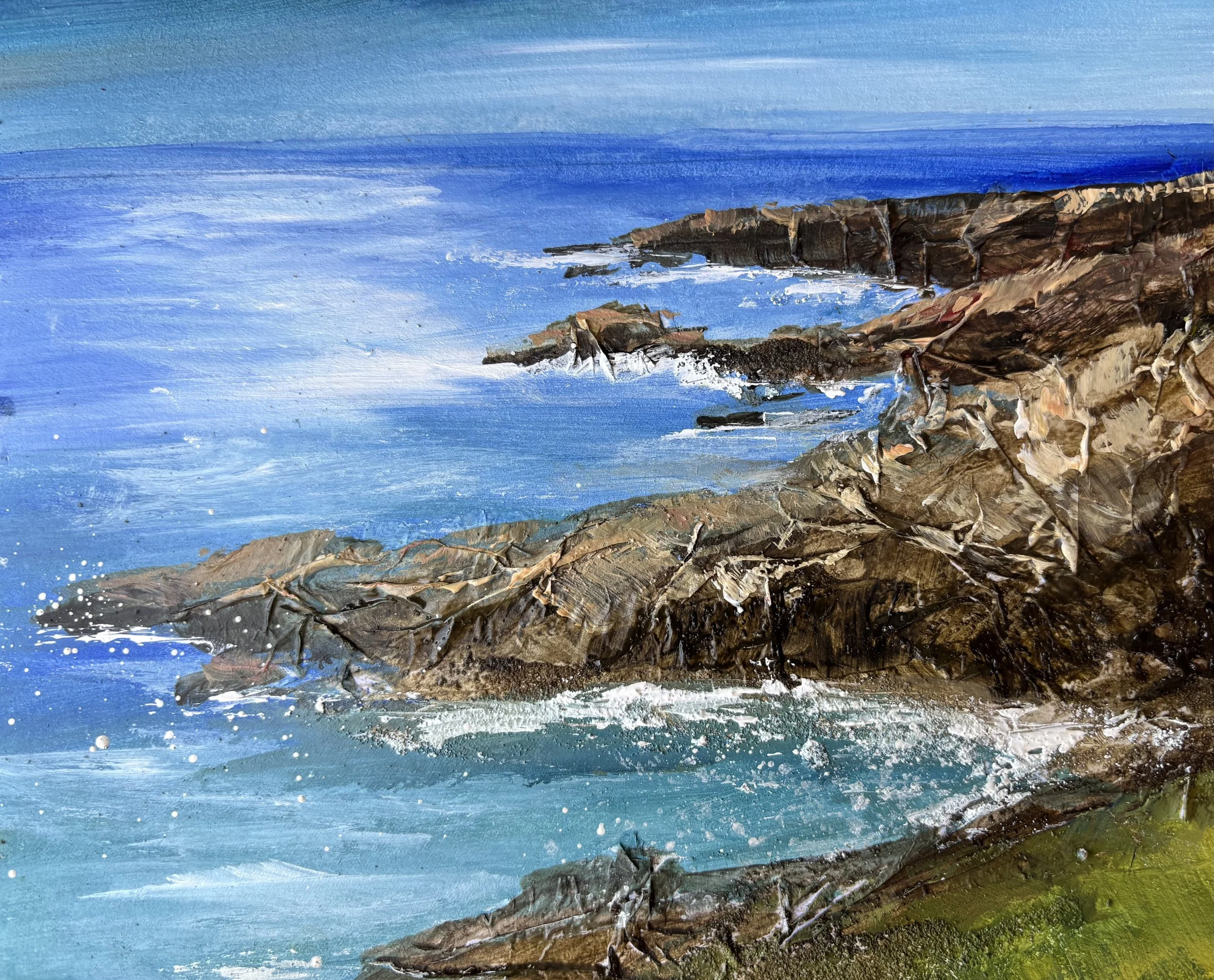
Painting by Cathryn Jeff
Painting on top of texture
Make sure the texture is completely dry before continuing. I usually use a hair dryer to speed up the process. Once dry, I apply an underpainting, ensuring that all the peaks and troughs of the texture are covered with colour.
When painting a seascape, for the underpainting, I tend to choose warm tones such as peach, pink, lilac, or orange. These colours create a striking contrast with the blues and greys of the upper painted layers. The result is a subtle warm glow that peeps through the finished painting, adding depth and vibrancy. The textured surface also provides opportunities to leave small areas of the underpainting visible, enhancing the richness and visual interest of the piece.
Adding highlights and shadows
Towards the end of the painting process, to enhance the texture, I apply acrylic paint fairly thickly in a contrasting colour. Using a flat brush held almost parallel to the surface, I lightly touch the peaks of the tissue paper texture. This technique highlights the craggy surfaces of the rocks where the light would reflect, or by choosing a dark colour on top, deepens the shadows. By carefully choosing contrasting colours to represent highlights and shadows, the texture becomes more pronounced and realistic.
Have a go! You might think of other different ways of adding texture to your work.